Selling in Covington's Historic District: The Paper Trail That Decides Your Price
July 23, 2026
July 23, 2026
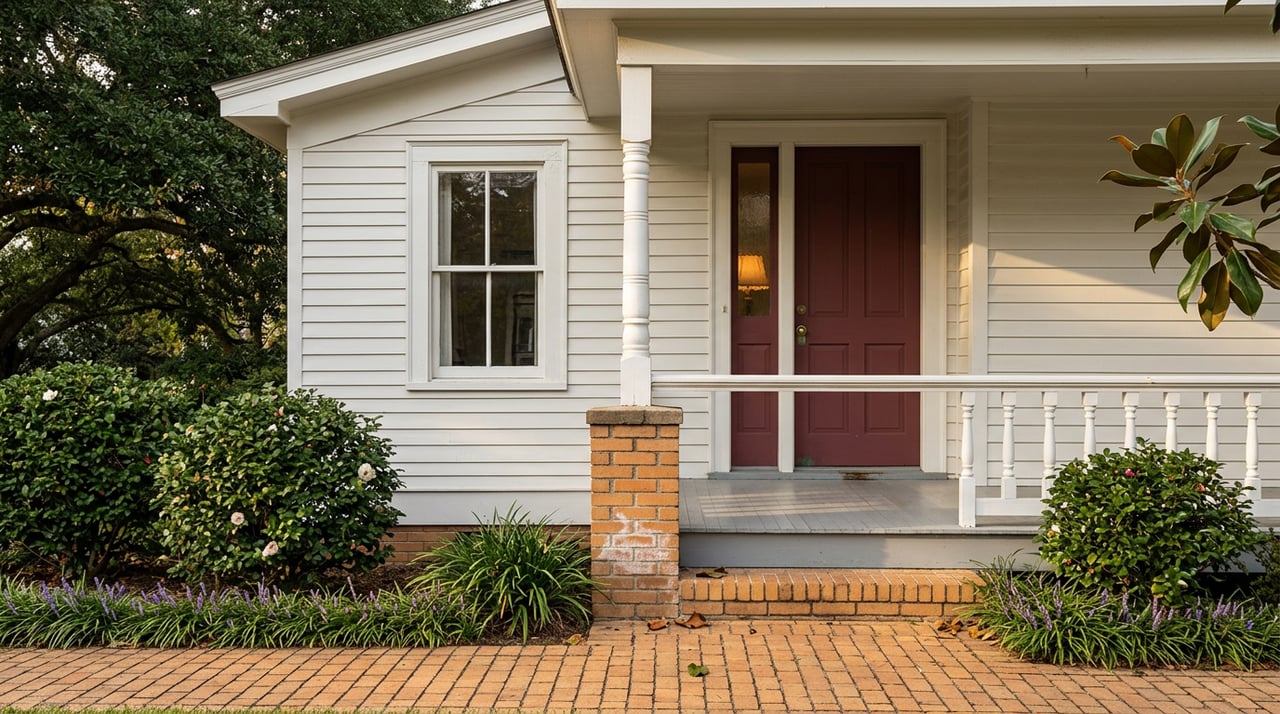
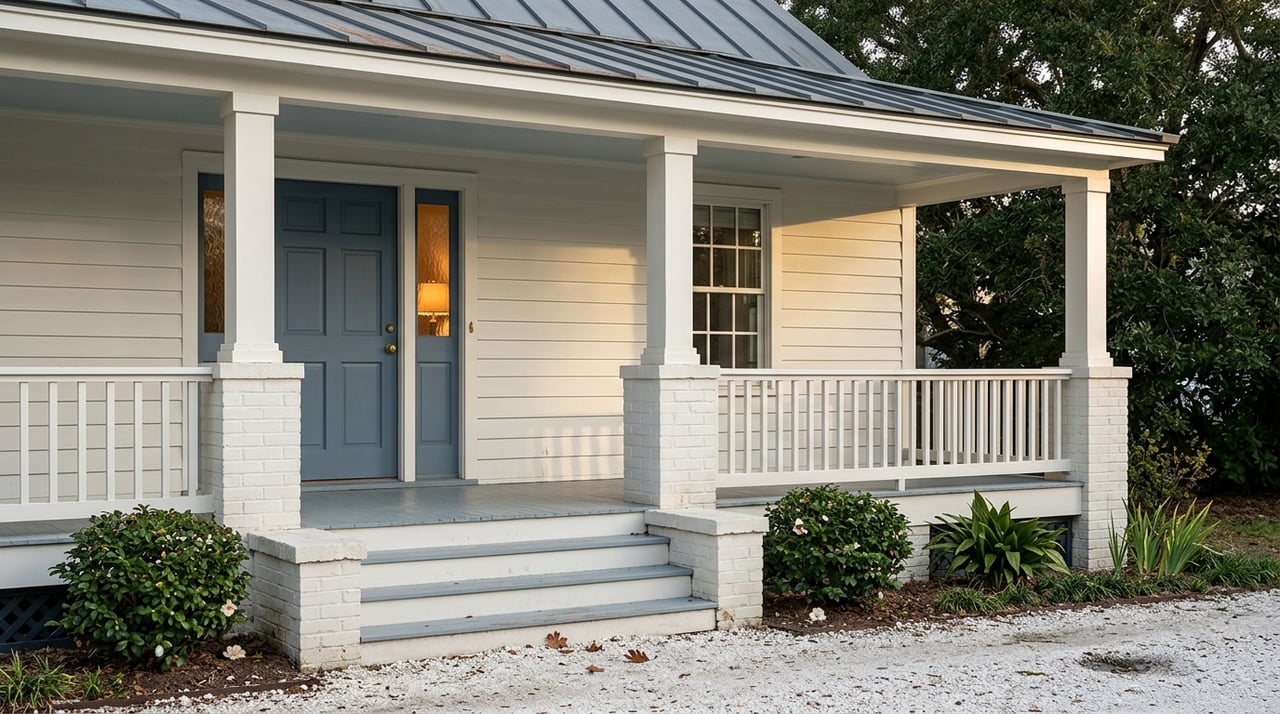
A buyer walks the front porch of a raised cottage two blocks off Columbia Street, mentally rebuilding the rear elevation as they go. New windows on the side wall. A screened addition off the kitchen. A privacy fence along the ox lot. Then they ask their agent whether any of that is actually possible, and the conversation stops.
That conversation is where your list price gets rewritten. Inside the Division of St. John, the seller who can answer it wins the negotiation. The seller who can't hands the buyer a discount they didn't have to give.
Covington is a slow, buyer-friendly market right now. The July 2026 median list price sits around $369,000, down roughly 6% from a year ago, with a median of 107 days on market that has not moved from July 2025. Homes are selling at about 5% below list, going pending in roughly 84 days on average. Multiple offers are rare.
That combination matters for one specific reason. When a buyer has time and leverage, they price in every uncertainty they can identify. A house they can renovate freely is worth more to them than a house whose exterior is governed by a public commission they have not yet met. If you don't close that uncertainty for them before the inspection period, they close it themselves, in your Inspection Response Addendum, at your expense.
The Division of St. John Historic District, in Covington, also known as the Covington Historic District, is a 100-acre district listed on the National Register of Historic Places in 1982, roughly bounded by West 21st Ave., Theard and Kirkland Streets, North Lee Lane and the Bogue Falaya River. If your home sits inside that boundary, the Covington Historic District Commission has authority over exterior changes.
The mechanism is a Certificate of Appropriateness. When an owner in the district wants to construct, alter, add on to, or demolish a building, no work may commence until a Certificate of Appropriateness has been issued, and the Commission must approve the plans and issue the CoA before a building permit can be issued for the work. Applications are filed at Covington's Planning and Zoning office at 317 N. Jefferson Ave.
The state statute is more specific than most sellers realize. Under Louisiana R.S. 25:737, no private building, structure, or edifice, including fences, boundary walls, signs, light fixtures, steps and paving or other appurtenant fixtures shall be erected, altered, restored, moved or demolished within an historic preservation district until after an application for a certificate of appropriateness as to exterior architectural features has been submitted to and approved.
Two limits on that authority are worth knowing, because they are exactly the questions a buyer will ask. The commission shall not consider interior arrangement or use, but shall consider the relationship of the exterior of the buildings concerned with all others in the historic preservation district. And nothing in the chapter prevents ordinary maintenance or repairs which do not involve a change of design, material, or of the outward appearance.
Translate that for your buyer. Repaint the same color, replace a rotted board with the same board, and no one is stopping you. Change a window opening, add a dormer, swap a wood fence for wrought iron, tear off the rear porch: those are Commission decisions.
Louisiana's standard Property Disclosure Document asks the seller directly whether the property lies within a historic district and, if so, to attach the state's Historic District Property Disclosure form. That addendum is a separate LREC document filled out in addition to the standard PDD.
Timing is where sellers give up leverage. Under R.S. 9:3198, the disclosure package must be delivered no later than the moment the buyer makes an offer. If the property disclosure document is delivered to the purchaser after the purchaser makes an offer, the purchaser may terminate any resulting real estate contract or withdraw the offer no later than seventy-two hours, excluding federal and state holidays and weekends, after receipt, without penalty and with earnest money returned.
If your historic district addendum shows up late, you have handed the buyer a free option to walk. In a 107-day market, that option gets used.
Assume the buyer will ask about exterior work before the inspection period ends. What they want to see is proof that the changes they're picturing are approvable, or at least understood. Sellers who assemble the following before listing consistently defend their number better than sellers who don't:
Two of those documents cost you nothing and change what the buyer sees. The Design Guidelines tell them what "approvable" looks like. The nomination inventory tells them which parts of the house the Commission actually cares about. Handed those in the disclosure package, most buyers stop pricing in mystery and start pricing in a specific list of choices.
Are you actually in the district? The 1982 NRHP boundary is not the same as any local overlay, and the city's own footprint is still shifting. Covington commissioned a Cox|McLain Environmental Consulting historic resources survey with fieldwork in 2017, and the report recommended that the NRHP nomination be formally updated with the National Park Service and that the City establish a local historic district in Spring, which could extend benefits such as tax credits and grant opportunities to property owners within these districts. If your home sits just outside the Division of St. John, along Spring or in the surrounding blocks, verify status with Planning and Zoning before you set a number. The overlay you're pricing against may not be the overlay in force at closing.
Is your buyer counting on the 20% federal rehab credit? Investor buyers often do. Do not let that expectation ride on your CoA approvals. The Louisiana Division of Historic Preservation is explicit that approval by a local commission does not guarantee approval by the Division of Historic Preservation or National Park Service for the rehabilitation tax credit, and the owner must submit the required applications to receive the necessary approval. And unlike the local Commission, the Division of Historic Preservation and the National Park Service review all work to a building, interior and exterior, and proposed work must meet the Secretary of the Interior's Standards for Rehabilitation. That is a marketable feature for the right buyer, but only if you describe it accurately.
The house on Columbia Street or Jefferson Avenue is not what the buyer is buying. They are buying the house plus a defined set of future decisions about the exterior. Those decisions run through a public body that meets on a schedule, applies published guidelines, and issues a paper record. You either hand them that record on day one, priced into your number, or you let them assume it's worse than it is and pay for the assumption in negotiation.
In a market where the average sale closes 84 days after listing at 5% under list, the sellers who prepare that paper trail before the sign goes in the yard are the ones who keep the 5%.
If your home sits inside the Division of St. John, or anywhere the boundary is about to move, Patricia Conaghan can walk your specific address, pull the CoA history, and price the listing against the paper trail you actually have. Let's talk about your next move.
Stay up to date on the latest real estate trends.

Patricia has a comprehensive understanding of the market and is skillful in strategic pricing and marketing. She believes her clients are #1. It's all about her clients and their best interests. Patricia helps people every step of the way when purchasing or selling homes, providing professional and trustworthy full service.