What the Abita Springs Median Price Isn't Telling You
June 4, 2026
June 4, 2026
When buyers compare Northshore towns on price, Abita Springs looks like the obvious value play. The median list price in May 2026 sat at $345K — below Mandeville's $356K and well below the premium end of that market. A reasonable person would conclude: similar area, lower price, easy call.
That conclusion skips the part that actually determines whether a purchase goes smoothly or sideways. Abita Springs isn't one market. It's three distinct sub-markets sharing a zip code, each with different assets, different buyer pools, and in one case, a layer of regulatory process that doesn't appear anywhere on the listing sheet until you're already under contract.
| Sub-Market | Defining Asset | Key Friction |
|---|---|---|
| Historic District core | National Register character, walkable to downtown, Tammany Trace access | Certificate of Appropriateness required before any building permit |
| Tammany Trace-adjacent neighborhoods | Trail access baked into the address, walkable to Abita Brewery and Farmers Market | Higher lot premiums near trailhead; fewer large-lot options |
| Money Hill | Gated, 3,500+ acres, lake preserves, golf, 100+ ft elevation | Separate HOA structure; distinct lifestyle from town center |
The median price pools buyers from all three into one number. A 1,200-square-foot bungalow in the historic district, a three-bedroom on a wooded acre near the Trace, and a lot inside Money Hill's gated perimeter are not the same transaction with a similar price tag. They're different purchases that happen to share a town name.
What makes this practically relevant right now: the spread between median list price ($345K) and median sale price over the trailing twelve months ($300K) is wider than it should be if these were all equivalent properties trading efficiently. That $45K gap reflects buyers who understand which sub-market they're in negotiating differently than buyers who treat Abita Springs as a single product.
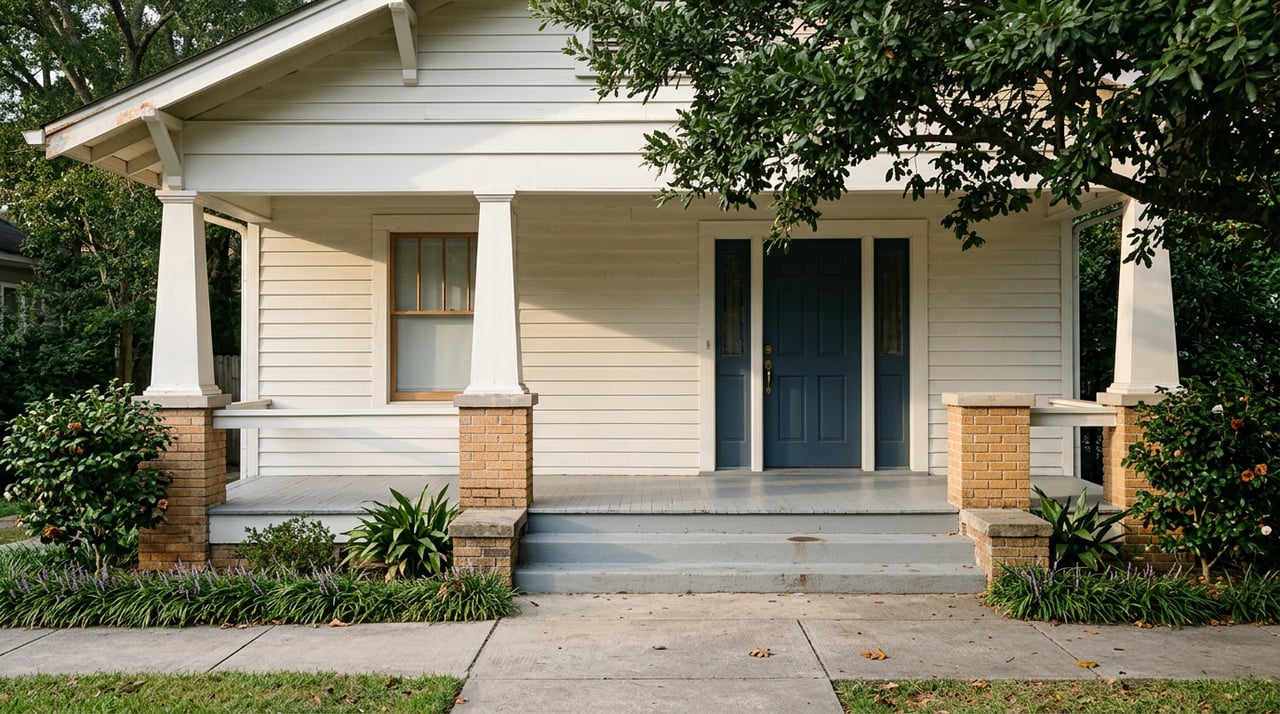
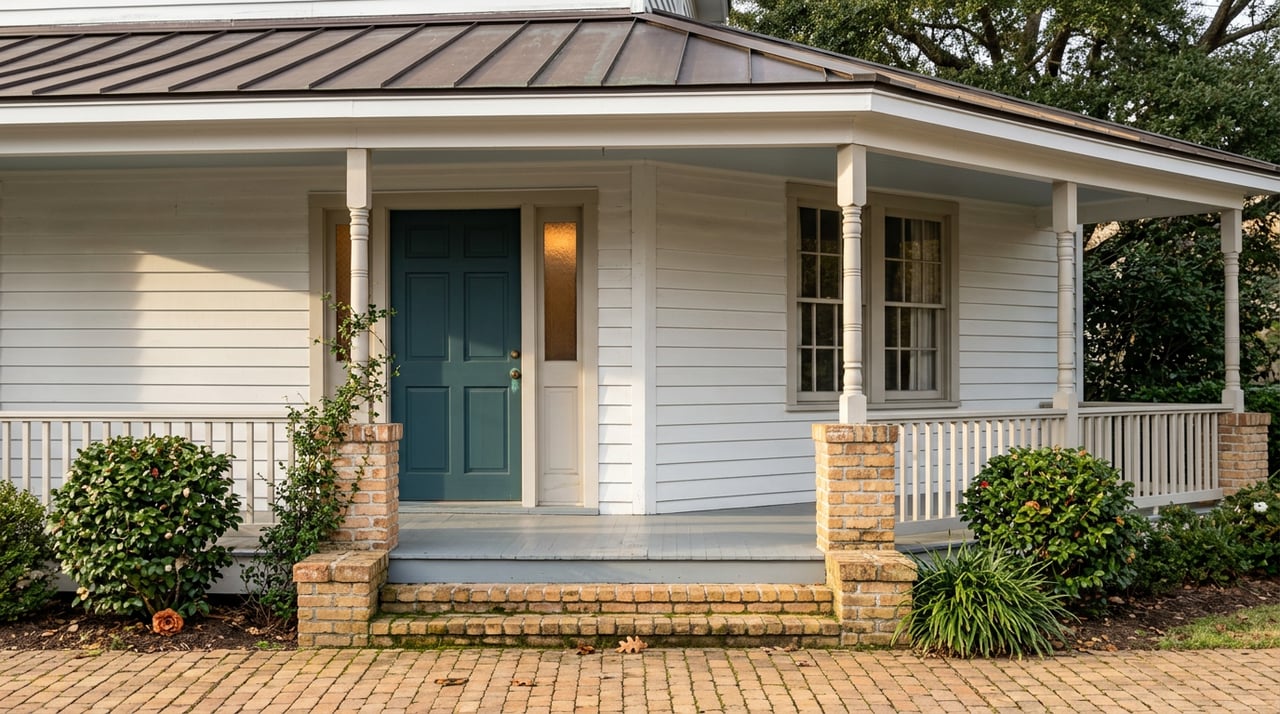
The Abita Springs Historic District covers 162 acres and was listed on the National Register of Historic Places in 1982, with 180 contributing buildings. Most were built between 1900 and 1930 in shotgun and bungalow forms, with the wide-porch "North Shore house" style that defines the older residential streets.
Buying here is a real estate decision and a preservation commitment. Before any building permit can be issued for a property zoned historic, the owner must first obtain a Certificate of Appropriateness from the Historic Commission. That includes new construction, remodels, additions, and fences. The commission meets the second Tuesday of each month at Abita Springs Town Hall; applications are due seven days before the meeting date.
For a buyer planning any renovation after closing, this process adds a mandatory review cycle to the timeline. A contractor who is ready to start in week one after closing cannot start until the Commission has reviewed and approved the scope. For buyers accustomed to pulling permits directly, this is the friction that most often catches people mid-transaction. It isn't a reason to avoid the historic district. It is a reason to account for the approval cycle in your purchase timeline and renovation budget before you make an offer, not after.
There is one detail worth knowing about lots that straddle the boundary: active listings have noted that a property positioned within 150 feet of highway frontage falls under historic restrictions, while portions set back beyond that threshold do not. On irregularly shaped or deep lots, the applicable zone can depend on exactly where the structure sits.
Three signals in the May 2026 data point in the same direction for buyers.
Taken together, this is a buyer's window in a market that is not typically described that way. Sellers who overpriced relative to condition or location are adjusting. Buyers with clear criteria and a good understanding of which sub-market they're entering have room to negotiate in a way that was harder to find two years ago.
Money Hill operates as its own category. The gated community sits at more than 100 feet above sea level, covers over 3,500 acres of lake and nature preserves, and includes a golf course, pool, tennis courts, fitness center, community garden, and hiking trails. It is physically located near Abita Springs and falls within the same general market area, but it trades on entirely different terms.
Buyers comparing Money Hill lots or homes to historic district bungalows using the same median benchmark will consistently misread both. Money Hill is not a version of Abita Springs with a gate in front of it. It is a resort-style community with HOA infrastructure, separate from the town's Historic Commission and Planning and Zoning process, and it attracts a buyer who wants managed amenities rather than small-town walkability.
If the Tammany Trace, the Farmers Market, and the proximity to the Abita Brew Pub are what drew you to Abita Springs, Money Hill is likely not your market. If you want elevation, a private lake, and a structured community, the town center is likely not your market. The median price tells you nothing about which of those two you're buying.
Abita Springs is currently running a Comprehensive Master Plan update, a community-led charrette process designed to shape zoning and land use policy going forward. That kind of process typically signals a town managing growth rather than being overtaken by it.
In March 2026, the Board of Aldermen voted 4-0 to authorize a $3.75 million revenue bond for upgrades to the municipal wastewater system. Infrastructure investment of that scale, approved unanimously, is a town signaling that it expects to support more residents and is building the capacity to do so. For buyers who worry that Abita Springs is too small to sustain long-term value, these two moves are the most relevant data points available right now.
Does the Certificate of Appropriateness process apply to routine maintenance? The Historic Commission approval is required for structural changes, additions, fences, and new construction in historically zoned properties. Routine maintenance that matches existing materials in kind generally does not require a COA, but scope matters. When in doubt, confirm with the Planning and Zoning office at (985) 892-0711 before any contractor begins work.
Can I build new construction in the historic district? Yes, with Historic Commission approval. Active listings show new construction homes built within the historic district, but the design must go through the COA review process. One listed parcel noted that a structure positioned within 150 feet of highway frontage falls under historic restrictions; portions positioned further back on the same lot may not. Lot-specific conditions vary.
Is Tammany Trace access priced into listings near the trailhead? Consistently, yes. The trail's 31-mile paved corridor through five St. Tammany communities is the most frequently cited location asset in active and recently sold Abita Springs listings. Properties with direct rear-lot or short-walk access to the Trace carry a premium relative to the general zip code median, particularly for buyers who prioritize trail-accessible daily living over lot size.
If you're weighing Abita Springs against Mandeville, Covington, or another Northshore community, the median comparison is a starting point, not an answer. Understanding which sub-market matches your plans, and what the approval process looks like if you're buying in the historic district, is the work that happens before the offer.
Patricia Conaghan has worked with buyers across the Northshore, including Abita Springs' historic district, Tammany Trace-adjacent neighborhoods, and beyond. Let's talk about your next move.
Stay up to date on the latest real estate trends.
Patricia has a comprehensive understanding of the market and is skillful in strategic pricing and marketing. She believes her clients are #1. It's all about her clients and their best interests. Patricia helps people every step of the way when purchasing or selling homes, providing professional and trustworthy full service.